
"coffee imports South Korea"
300 article(s) found

Starbucks Diaoguang Man Coffee: the tripod is dominated by or.
China's current per capita annual coffee consumption is 5 cups, which is far lower than the annual per capita level of about 300 cups in Japan and South Korea, and the world average is about 240 cups. However, China's coffee consumption continues to grow at an annual rate of 15% to 20%, and is becoming the most potential coffee consumer in the world. At present, there are local, European, American and Korean departments in the Chinese market.

Coffee lovers must go to a romantic photo cafe to drink coffee in the Super Lulai camera
If you're someone who loves photos and coffee culture, forget Starbucks. In South Korea, a couple built a 9.2-meter-high cafe in the shape of a Roklai dual-lens camera, realizing their own dream and that of many camera enthusiasts. Park Sung-hwan dreamed of becoming an air force pilot when he was in elementary school. Although his family did not support this dream, he still insisted.
Exploding the three factions of Chinese cafes
At present, China's per capita coffee consumption is 5 cups per year, which is far lower than that of Japan and South Korea, with an average of about 300 cups per person per year. However, coffee consumption in China continues to grow at an annual rate of 15% to 20%, making it the world's most potential coffee consumer. In the current Chinese market, there are three forces active in China, Europe and the United States, and they are using

What is the demand for coffee in China?
With the globalization of economy and trade, China has introduced a lot of foreign brands, including successful examples and failure cases, and the most important thing often does not depend on the business model of foreign brands, but on the understanding of Chinese market consumers. When it comes to the most successful case, Western retail concept foreign coffee shops are booming in China. According to a report on the Financial Times website on December 29,

Korean cafe disinfectant epidemic prevention materials are used as syrup customers complain after drinking
Since the outbreak of the COVID-19 epidemic, people have gradually become more aware of epidemic prevention, and wearing masks has become a daily routine. Every household is filled with supplies such as medical alcohol, 84 disinfectant and hand-free disinfectant. Many coffee shops offer free syrup, but recently there has been a fight in South Korea.

Beijing Evening News: cafes suddenly become popular
Some people say, how to tell the Korean cafe? Just see if it has a transparent glass window five or six meters high. This is true. Recently, Korean cafes which have won by "tune" are very popular in the capital. Li Zhiqi of Zhiqi Future Marketing Consulting Co., Ltd. said that the cafe has entered the 2.0 era, and the premium generated by the so-called "adjustment" can reach 30% to 30%.
Cafes operating in China have suddenly become popular.
Some people say, how to tell the Korean cafe? Just see if it has a transparent glass window five or six meters high. This is true. Recently, Korean cafes, which win by adjustment, are very popular in the capital. Li Zhiqi of Zhiqi Future Marketing Consulting Co., Ltd. said that the cafe has entered the 2.0 era, and the premium generated by the so-called adjustment can reach 30% to 50%. In

Coffee is just the consumption of life! It's not coffee with no future, it's boutique coffee with no future.
Professional barista communication please follow the coffee workshop (Wechat official account cafe_style) in 1993, when I went to the Muzhang International Food and Beverage equipment and Food Exhibition in Tokyo, Japan, I saw the development of Japan's own baking industry at that time. I was very impressed by Bonmac's idea of automating the process of baking (baking) in the exhibition. I bought it at Yonghan Bookstore when I returned to Taiwan.

The Chinese coffee market has entered a white-hot stage due to the dispute between the three major factions of Chinese cafes
At present, China's per capita coffee consumption is 5 cups per year, which is far lower than that of Japan and South Korea, with an average of about 300 cups per person per year. However, coffee consumption in China continues to grow at an annual rate of 15% to 20%, making it the world's most potential coffee consumer. In the current Chinese market, carving time into the Internet, Starbucks vigorously do direct sales,
Coffee and La Finca of Design
We have long heard of the vigorous development of coffee shops in South Korea in recent years, and we have also learned from a variety of picture materials that this country integrates coffee and design elements. This immersive experience gives a deeper sense of the maturity of the coffee industry in this country, as well as cafes that are more diversified as a result of integration into the design. This itinerary is rather tight, excluding the reference.
South Korean study finds caffeine inhibits brain cancer growth
Researchers in South Korea and other countries reported in the latest issue of the US Journal of Cancer Research that they found through animal experiments that caffeine contained in coffee, green tea, etc. can effectively inhibit the growth of a brain tumor.

Opening a coffee shop: it looks beautiful, but it's hard to do.
Professional baristas exchange please follow the coffee workshop (Wechat official account cafe_style) Korean coffee shops accompanied by South Korean TV dramas have ushered in a wave of closure in China. With the rapid growth of the domestic coffee market, the coffee shop has become a more and more important life scene, but compared with Japan, South Korea, Europe and the United States and other countries, the per capita sales of the domestic coffee market is still low, for most ordinary consumers
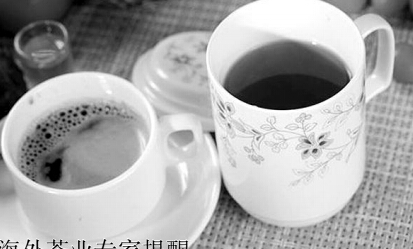
Overseas tea industry experts remind: Chinese tea should guard against the threat of coffee
At the second Tea Industry Conference held recently, a number of overseas experts warned that Chinese tea should pay attention to the threat from coffee. Although China is a big tea drinker, coffee consumption has grown rapidly in recent years, increasing by about 15% a year. The same is true of South Korea, where coffee consumption has grown by 19.2% a year over the past few years. The main consumer of coffee is 2030 years old.

2015 China International Culture and Art Fair designated CAFFE PASCUCCI as the only coffee supplier
2015 China International Culture and Art Fair (Art China 2015) is an important part of the third Huimin Cultural consumption season in Beijing. The exhibition covers an area of 13000 square meters and has a total of 10 venues, covering classic works of art by Chinese modern and contemporary celebrities and powerful artists, as well as contemporary art works by relevant art institutions at home and abroad (galleries and museums). And exhibited Biga for the first time.

Seoul of Wenqing: Hongda District Art Tour Cafe is around the corner.
Professional barista exchanges please follow the coffee workshop (official Wechat account cafe_style) in October, it is the season to see red leaves in South Korea again. For those of you who don't buy clothes and cosmetics, don't miss the Hongdae, which is the most artistic area. Designers recommend going to the coffee shop to see the chair in the afternoon, which is the best time to sit down in the coffee shop. There are many coffee shops in Seoul, but the local one

Introduction to the flavor and taste characteristics of the moderate sour and bitter Panamanian coffee manor
Because of its small quantity, Panamanian coffee products are based on special coffee. The country provides its high-quality products to specialized stores around the world, such as Denmark, Britain, Greece, Norway, Sweden, South Korea, Japan, Taiwan and the United States. "Panamanian coffee beans | how about Panamanian coffee beans, Mr. Wen? Panamanian coffee is divided into small batches and classified by w.kaf.name "Panamanian Coffee cultivation"
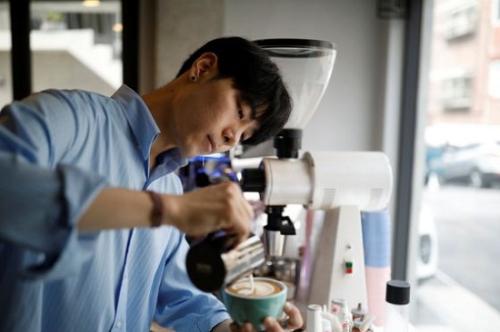
Korean youth entrepreneurs also love cafes, but it is a pity that they will not last more than five years.
Wenqing has four vulgarities: she had a music dream since childhood and resigned to open a cafe. Change the world by starting a business and leaving everything to travel. For the exchange of professional baristas, please follow the coffee workshop (Wechat official account cafe_style) obviously, one world, one dream, there are no fewer young artists in Korea than we do. South Korean youth entrepreneurs also love cafes. According to Korean media reports, South Korea according to the national tax

Introduction to the kinds of Coffee Sugar
White granulated sugar, also known as sucrose, is a granular crystal and is the basic raw material for sugar production. According to the size of the crystal, there are three kinds of sugar: coarse sand, medium sand and fine sand, all of which are made from sugar cane or sugar beet. It is characterized by high purity, low moisture and few impurities. The content of domestic granulated sugar is more than 99.45% and the moisture content is less than 0.12%. According to the standard, it is divided into three types: excellent grade, first grade and second grade.

Korean Cafe recommends popular Cafe in Seoul
Article: Zhao Mingming Picture: Qin Jiangyao Zhao Mingming is in Seoul, the cafe is like kimchi. It is always easy to find coffee in the streets, both local cafes and foreign coffee chains are often very popular, and people walking on the street generally hold a cup of coffee products. In so many cafes, there are several that are particularly eye-catching.

Introduction to the knowledge of Italian Coffee companion
Introduction to the types of sugar for coffee white granulated sugar, also known as sucrose, is a granular crystal and is the basic raw material for sugar production. According to the size of the crystal, there are three kinds of sugar: coarse sand, medium sand and fine sand, all of which are made from sugar cane or sugar beet. It is characterized by high purity, low moisture and few impurities. The content of domestic granulated sugar is more than 99.45% and the moisture content is less than 0.12%, which is classified according to the standard.